
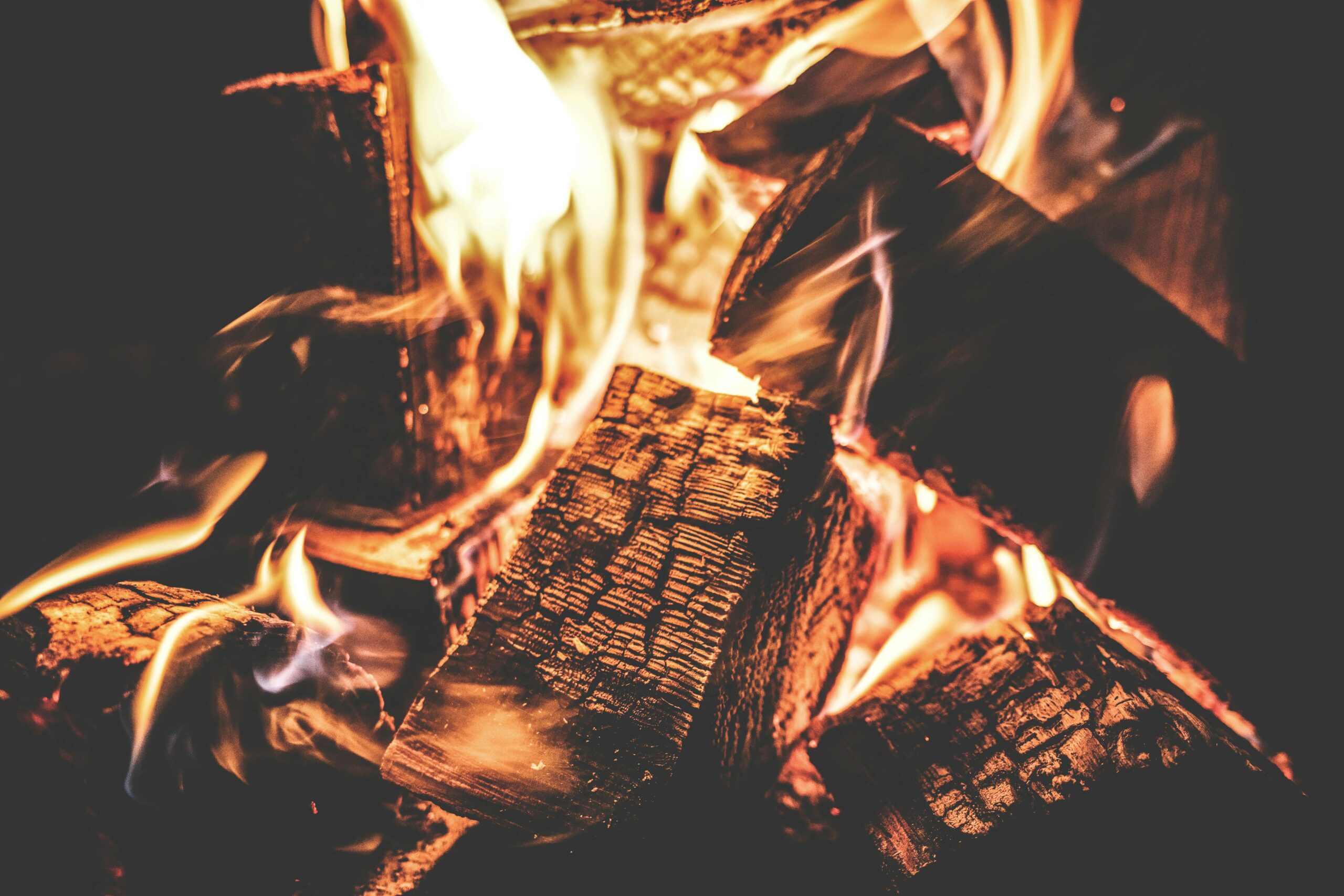
A fire should warm the room, not fill it with smoke or leave you wondering whether something is wrong with your stove. If you have been struggling with smoky logs, poor heat or a fire that refuses to get going, the logs themselves are often the problem. When buying firewood in Hitchin, a few simple checks will tell you whether your fuel is ready to burn cleanly.
Is your firewood too wet?
Damp wood is the most common cause of a smoky fire. Freshly felled timber can be around half water by weight, and that moisture has to be driven off before the wood will burn properly.
When wet logs go on the fire, much of the heat is spent boiling that water away. The fire struggles to reach a good burning temperature, so you get more smoke, less warmth, a blackened stove glass and tar building up in the chimney.
For wood-burning stoves and open fires, firewood with a moisture content of 20% or less is recommended. In England, wood sold in smaller quantities (under two cubic metres) must meet that standard and carry the Ready to Burn label, so look for it when you buy.
Quick ways to check
A moisture meter costs very little and gives the most reliable answer. Split a log and press the meter into the freshly exposed face rather than the outside. Without a meter, there are some useful clues: seasoned logs feel lighter, often have cracks running across the ends, and make a hollow knock when two are banged together. Wet logs feel heavy, sound dull and may hiss or bubble at the ends when they burn.
Could poor airflow be the problem?
Even dry logs will smoke if the fire is starved of air. Fire needs oxygen to burn cleanly, and when airflow is restricted, the wood smoulders instead of producing steady flames.
This often happens when the stove’s air vents are closed down too early, when the firebox is packed too tightly with logs, or when the chimney is partly blocked. Follow your stove manufacturer’s guidance on vent settings, especially when lighting and when adding fresh logs.
If smoke comes back into the room rather than going up the chimney, stop using the appliance and get it checked by a professional. Make sure a carbon monoxide alarm is fitted in any room with a fuel-burning appliance, and test it regularly.
Is your chimney due a sweep?
A chimney lined with soot and tar draws poorly, which leads to smoky fires and increases the risk of a chimney fire. When burning wood, it is generally recommended to have your chimney swept at least once a year, and many sweeps advise twice a year for stoves in regular use. Autumn, before the heating season starts, is a sensible time to book.
Are you using the right firewood?
Different woods burn in different ways. Dense hardwoods such as oak, ash and beech give long, steady heat when properly dried. Softwoods catch quickly, which makes them useful as kindling, but they burn through fast.
That said, the condition of the wood matters more than the type. Even good hardwood will smoke heavily if it has not dried properly.
How to avoid smoky fires in future?
A little preparation saves a lot of frustration through the winter. Store logs somewhere ventilated, raised off the ground and covered on top, but with the sides open so air can move through. Avoid wrapping the whole stack in plastic sheeting, as this traps moisture and slows drying.
Bring a basket of logs indoors a day or two before you need them, so any surface damp can dry off. And plan your supply early. Buying in late summer or early autumn means you are not stuck with whatever is available on the first cold night.
Firewood from Jepps Firewood
Jepps Firewood is a family-run business that has supplied local homes since 1972. We sell seasoned hardwood logs, nets of logs, large nets of kindling and barrow bags, so there is an option for every stove and fire. If your current logs are damp or running low, get in touch to check delivery to your area and we will help you work out how much you need for the winter.